
Book Alaska Helicopter Tours With Heli Alaska Inc
The Ultimate Guide to Alaska's Wildlife
At Heli Alaska, we’ve spent decades exploring Alaska’s wilderness from above, and this guide shares everything we’ve learned about its incredible wildlife. For the best view of Alaska’s wildlife, look down from above. Explore our flightseeing tours and see the state’s wild beauty from a whole new perspective.
Why Alaska Is the World's Best Wildlife Destination
Alaska is home to some of the most incredible wildlife on Earth. From brown bears fishing in salmon streams to whales surfacing along icy fjords, every region offers something unforgettable. The state’s vast wilderness, clean air, and untouched ecosystems create a natural haven for hundreds of animal species. Whether you’re exploring coastal rainforests, arctic tundra, or glacier valleys, Alaska feels wild in a way few places do.
What makes Alaska so special is the chance to see animals where they truly belong, in their natural habitats. Moose wander through open plains, eagles soar above mountain ridges, and sea otters drift through calm coastal waters. The long summer days bring endless light for wildlife viewing, while the quieter months of fall and spring reveal a different side of Alaska’s beauty. It’s not just about the animals themselves, but about witnessing nature at its most raw and powerful.
Read More...
Heli Alaska helps travelers experience this wilderness safely and responsibly. With FAA-certified pilots and deep local knowledge, the team takes guests to remote areas where bears, caribou, and whales can be seen from a unique aerial view. Each tour is designed to respect the environment while giving visitors a deeper connection to Alaska’s wild side. For anyone who dreams of seeing nature at its purest, there’s no better way to explore Alaska’s wildlife than from the sky.
Understanding Alaska’s Ecosystems and Habitats
Alaska’s wilderness is home to some of the most diverse and dramatic ecosystems on Earth. From icy tundra plains and alpine ridges to lush rainforests and coastal marine environments, each habitat supports a unique balance of species adapted to its surroundings. Seasonal shifts, from long summer days to cold winter nights, shape every aspect of life here and influence migration, feeding, and breeding patterns. Understanding these ecosystems helps travelers appreciate not only Alaska’s beauty but also the natural forces that sustain it.

The Tundra
The Alaskan tundra is one of the most extreme and fascinating ecosystems on the planet. Found in the far north and at high elevations, this landscape is defined by frozen ground, low-growing plants, and long, harsh winters. Despite its cold and treeless environment, the tundra supports a surprising amount of life. Caribou, arctic foxes, and migratory birds thrive here during the short summer season, when the ground thaws just enough to reveal mosses, lichens, and wildflowers.
Quick Facts about Alaska’s Tundra:
The tundra covers roughly one-third of Alaska’s land area, stretching from the Brooks Range to the Arctic coast.
Permafrost lies just below the surface, preventing deep-rooted plants and shaping the region’s unique vegetation.
Summer temperatures can reach 50–60°F (10–15°C), while winter temperatures often drop below –30°F (–34°C).
The tundra is a critical breeding ground for migratory birds that travel thousands of miles each year.
The Rainforest
Alaska’s coastal temperate rainforest is one of the lushest and most biodiverse regions in the state. Found mainly in Southeast Alaska within the Tongass National Forest, this ecosystem thrives under heavy rainfall and mild coastal temperatures. Towering Sitka spruce and western hemlock trees dominate the landscape, while moss, ferns, and lichens blanket the forest floor. The rainforest supports a rich web of life, from salmon running through forest streams to bears and eagles that depend on them for food.
Quick Facts about Alaska’s Rainforest:
The Tongass National Forest is the largest temperate rainforest in the world, covering over 16 million acres.
The region receives up to 100 inches of rain each year, creating a constantly moist environment.
Sitka spruce trees can grow more than 200 feet tall, making them some of the tallest trees in North America.
The forest’s rivers and streams are vital spawning grounds for five species of Pacific salmon, supporting both wildlife and local communities.


The Alpines
Alaska’s alpine ecosystem stretches across the mountain ranges that define much of the state’s rugged landscape. Found above the tree line, these high-altitude regions are shaped by thin soil, cold temperatures, and strong winds. Despite their harsh conditions, alpine habitats are rich in specialized life. Low-growing shrubs, hardy wildflowers, and resilient lichens cover the rocky slopes, while animals such as Dall sheep, mountain goats, and marmots thrive in the steep terrain. During summer, the alpine tundra bursts with color and activity before returning to snow and silence in winter.
Quick Facts about Alaska’s Alpine Ecosystem:
Alpine regions are found in mountain ranges such as the Alaska Range, Chugach Mountains, and Brooks Range.
The tree line in Alaska typically occurs between 2,000 and 3,000 feet, depending on latitude and exposure.
Dall sheep and mountain goats are two of the most recognizable alpine animals, well adapted to steep cliffs and thin air.
These areas are highly seasonal, with a short growing period of just six to ten weeks each summer.
The Marine Ecosystem
Alaska’s marine ecosystem is one of the richest and most productive in the world. Stretching from the calm fjords of Southeast Alaska to the open waters of the Bering Sea, these coastal environments support an incredible range of life. Nutrient-rich currents feed vast populations of plankton, which form the base of a food web that sustains fish, seabirds, and marine mammals. Glaciers that meet the sea create a striking mix of ice, saltwater, and wildlife — a defining feature of Alaska’s coastline.
Quick Facts about Alaska’s Marine Ecosystem:
Alaska’s coastline spans more than 46,000 miles, longer than all other U.S. states combined.
The region’s cold, nutrient-rich waters support over 400 species of fish, including salmon, halibut, and cod.
Marine mammals such as humpback whales, sea otters, and seals rely on Alaska’s coastal waters for feeding and breeding.
Tidewater glaciers, where ice meets the ocean, create dynamic habitats that attract both marine and bird life throughout the year.


The Boreal Forest
The boreal forest, also known as the taiga, stretches across much of interior and southcentral Alaska. It is the largest terrestrial ecosystem in the state, characterized by dense stands of spruce, birch, and aspen trees. The forest experiences long, cold winters and short, warm summers, creating a landscape that supports some of Alaska’s most iconic wildlife. Moose, black bears, wolves, and lynx roam through a mosaic of rivers, wetlands, and forest clearings. Despite its quiet appearance, the boreal forest plays a vital role in regulating the global climate by storing vast amounts of carbon in its soils and trees.
Quick Facts about Alaska’s Boreal Forest:
The boreal forest covers roughly 40% of Alaska’s land area, making it one of the largest intact forests in the world.
Dominant tree species include white spruce, black spruce, paper birch, and aspen.
This ecosystem supports diverse wildlife, including moose, wolves, foxes, and numerous migratory birds.
Wildfires are a natural part of the boreal cycle, helping renew vegetation and maintain ecological balance.
The Best Views of Alaska's Ecosystems are Above
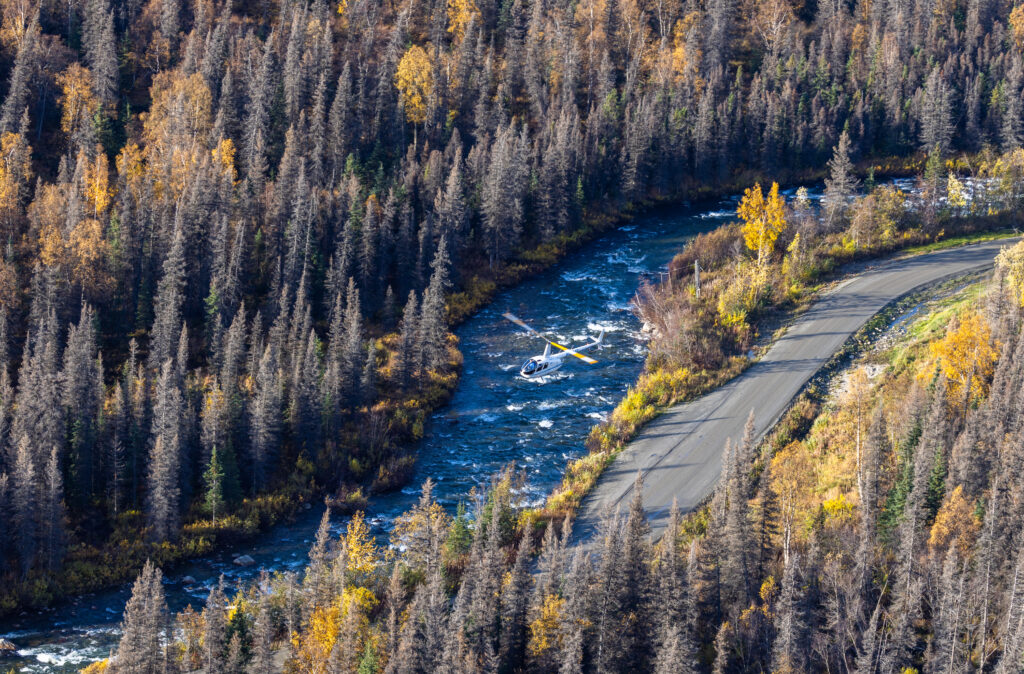
At Heli Alaska, we take you beyond the trails and into the heart of Alaska’s wild landscapes. Our flightseeing and aerial photography tours reveal the full scale of the state’s ecosystems, from glacier-carved valleys to endless tundra. Whether you’re a photographer, filmmaker, or traveler chasing the perfect view, there’s no better way to experience Alaska’s natural beauty than from the air.
Alaska's Most Iconic Animals
Alaska is home to some of the most iconic wildlife on Earth, animals that define its wilderness and capture the spirit of the North. From towering moose and powerful brown bears to soaring bald eagles and surfacing humpback whales, each species plays a vital role in the state’s diverse ecosystems. These animals aren’t just symbols of Alaska’s wild beauty; they’re also reminders of how deeply connected life here is to the land, the sea, and the changing seasons.
The 'Big 5' Mammals
Known as Alaska’s Big Five, these mammals are the stars of the state’s wilderness and the ultimate goal for wildlife enthusiasts. The grizzly bear, moose, Dall sheep, caribou, and gray wolf each represent a different side of Alaska’s rugged landscapes — from tundra plains to mountain peaks. Spotting even one of these species in the wild is an unforgettable experience, but together, they showcase the power, resilience, and diversity that make Alaska one of the world’s greatest destinations for wildlife viewing.
Brown Bears
Alaska’s brown bears are among the largest predators in North America and one of the state’s most famous wildlife sightings. They thrive in coastal regions where salmon runs provide a rich food source and in interior areas where they forage for roots, berries, and small mammals. Observing these powerful animals in their natural habitat, from Katmai’s rivers to Denali’s valleys, is one of the most thrilling experiences in the Alaskan wilderness.
Adult males can weigh over 1,000 pounds, especially during peak salmon season.
Alaska is home to an estimated 30,000 brown bears, roughly 98% of the U.S. population.
Dall Sheep
Dall sheep are icons of Alaska’s mountain ranges, easily recognized by their bright white coats and curved horns. These sure-footed animals live on steep, rocky slopes that offer both food and protection from predators. Their ability to navigate rugged alpine terrain makes them a symbol of resilience and balance in Alaska’s high country.
Found mainly in the Alaska Range and Brooks Range, often above 2,000 feet in elevation.
Mature rams’ horns can take up to eight years to reach full curl, often weighing 30 pounds or more.
Caribou
Caribou are the great travelers of the north, known for their massive seasonal migrations across Alaska’s tundra. Moving in herds that can number in the tens of thousands, they follow ancient routes to find food and avoid harsh conditions. These movements shape much of the Arctic ecosystem and have long been central to Alaska’s cultural heritage.
Alaska hosts 32 distinct caribou herds, totaling about 750,000 animals statewide.
Some herds migrate more than 3,000 miles each year, one of the longest land migrations on Earth.
Moose
The moose is Alaska’s largest land mammal and a familiar sight across forests, lakes, and wetlands. Despite their size, moose are surprisingly agile swimmers and can dive underwater to reach aquatic plants. In summer they thrive in the lush vegetation of lowlands, while in winter they move to wooded areas for shelter and browse.
Adult males can stand over 6.5 feet tall at the shoulder and weigh up to 1,600 pounds.
A moose’s antlers can span up to 6 feet across, growing and shedding each year.
Wolves
Wolves are elusive and intelligent predators that roam Alaska’s forests, tundra, and mountains. Living and hunting in tight family packs, they play a crucial role in maintaining ecological balance by managing populations of prey species like moose and caribou. Though often misunderstood, wolves are a cornerstone of Alaska’s wild identity and an indicator of healthy ecosystems.
Alaska supports an estimated 7,000 to 11,000 wolves, spread across nearly all major regions.
Wolf packs can range in size from 2 to 20 individuals, depending on territory and prey availability.
Marine Animals
Alaska’s coastal waters are among the most vibrant marine environments on Earth, supporting a vast array of species that thrive in its nutrient-rich seas. From playful sea otters drifting through kelp forests to powerful whales surfacing near glaciers, these animals define the rhythm of Alaska’s marine life. Whether you’re watching from a boat or viewing from the air on a flightseeing tour, every encounter reveals the diversity and strength of the state’s ocean ecosystems.
Humpback Whales
Humpback whales are one of Alaska’s most awe-inspiring sights, known for their graceful movements and dramatic breaching. They migrate thousands of miles from tropical breeding grounds to Alaska’s rich feeding waters each summer, where they feast on krill and small fish. Their haunting songs and cooperative feeding behavior make them favorites among wildlife enthusiasts.
Adult humpbacks can reach 50 feet in length and weigh up to 40 tons.
They use a unique technique called bubble-net feeding, where groups work together to corral fish.
Adult males can weigh over 1,000 pounds, especially during peak salmon season.
Alaska is home to an estimated 30,000 brown bears, roughly 98% of the U.S. population.
Orcas (Killer Wales)
Orcas are highly intelligent and social predators that travel in tight family groups called pods. They can be found throughout Southeast and Southcentral Alaska, especially around Kenai Fjords and Prince William Sound. Each pod has its own distinct calls and behaviors, and some specialize in hunting fish while others target marine mammals.
Alaska’s waters are home to both resident and transient orca populations.
Orcas can reach speeds of up to 35 mph when hunting or breaching.
Sea Otters
Sea otters are one of Alaska’s most endearing animals, often seen floating on their backs with pups or cracking shells with stones. They play a vital role in maintaining kelp forest ecosystems by keeping sea urchin populations in check. Their thick fur — the densest in the animal kingdom — keeps them warm in Alaska’s cold waters.
Sea otters have up to one million hairs per square inch of fur for insulation.
After near extinction from the fur trade, conservation efforts have helped their numbers rebound to over 90,000 in Alaska.
Harbor Seals and Steller Sea Lions
Harbor seals and Steller sea lions are common sights along Alaska’s glaciers, fjords, and rocky shores. Harbor seals are often seen resting on icebergs, while sea lions gather in noisy colonies along the coast. Both species rely on Alaska’s abundant fish populations and are key indicators of ocean health.
Harbor seals give birth on floating ice during spring and early summer.
Steller sea lions are the largest members of the sea lion family, with males weighing up to 2,000 pounds.
Walrus
Walruses are among Alaska’s most distinctive Arctic animals, easily recognized by their long tusks and whiskered faces. They gather in large herds on sea ice and coastal haul-outs in remote regions like the Bering and Chukchi Seas. These massive mammals feed primarily on clams and other shellfish, using their tusks to pull themselves onto ice or land.
Adult males can weigh more than 3,000 pounds and have tusks over 3 feet long.
Walrus populations in Alaska are estimated at around 200,000 individuals, primarily in western coastal regions.
Birds of Alaska
Alaska is a paradise for bird enthusiasts, home to more than 500 species that thrive in its diverse ecosystems. From coastal cliffs to mountain forests, the state’s vast wilderness supports everything from seabirds and raptors to songbirds and migratory species that travel thousands of miles each year. Watching these birds in their natural habitats offers a glimpse into the delicate balance of Alaska’s environment, and the beauty of its wild freedom.
Bald Eagles
No bird symbolizes Alaska’s wild spirit more than the bald eagle. With the largest population in the United States, they’re a common sight along rivers, lakes, and coastlines where fish are plentiful. These powerful raptors build massive nests high in trees or on cliffs, often returning to the same spot year after year. Seeing one soar overhead is a defining moment for anyone exploring Alaska’s skies.
Alaska is home to an estimated 30,000 bald eagles, more than any other U.S. state.
They can spot prey from over two miles away thanks to exceptional eyesight.
Puffins
With their colorful beaks and comical charm, puffins are some of Alaska’s most beloved seabirds. They nest in rocky cliffs along the Gulf of Alaska and spend most of their lives at sea, diving deep to catch fish. Visitors can often see them near coastal areas like Seward or Homer, where colonies gather in summer months. Watching puffins skim the waves or disappear underwater is a true highlight of any coastal wildlife tour.
Puffins can dive up to 200 feet while hunting for small fish.
Two species: horned and tufted puffins, breed along Alaska’s coastlines.
Ravens
The raven is both a cultural icon and a constant companion across Alaska. Revered in Indigenous legends and known for remarkable intelligence, ravens adapt easily to towns, forests, and open tundra. They’re skilled problem-solvers, mimicking sounds and working together to find food. Whether seen gliding over Denali or calling from a spruce branch, ravens embody the mystery and adaptability of Alaska’s wilderness.
Ravens can mimic human speech and even recognize individual people.
They often mate for life, forming strong social bonds within their territories.
Get The Perfect View of Alaska's Wildlife From Our Helicopter Tours
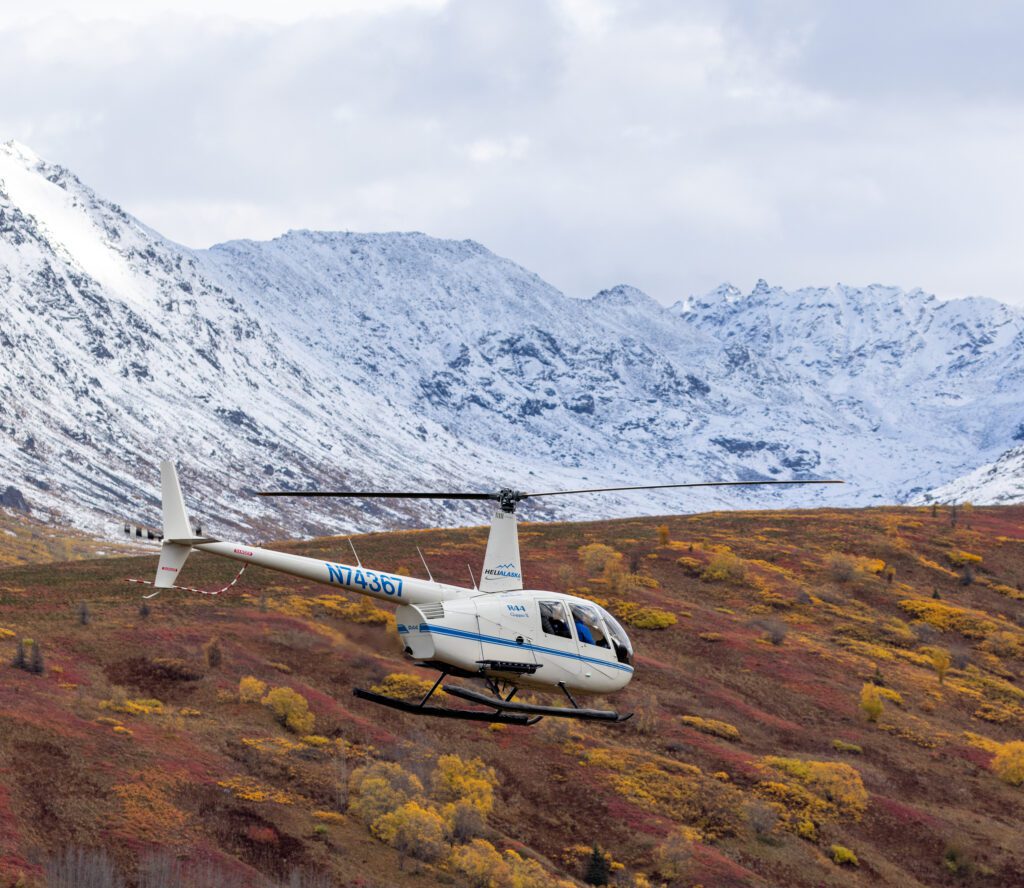
Every season in Alaska tells a different story, and there’s no better way to see it unfold than from the air. Heli Alaska’s year-round flightseeing tours showcase the state’s changing landscapes, from summer’s green valleys and glacial blues to winter’s snow-covered wilderness. Whether you’re chasing the Northern Lights or watching caribou cross the tundra, our experienced pilots bring you closer to Alaska’s wildlife and scenery than ever before.
The Best Time to Visit Alaska for Wildlife Viewing
The best time to visit Alaska for wildlife viewing depends on what you want to see, but every season offers something remarkable. Spring brings the return of migratory birds and awakening bears, while summer offers long days filled with moose, whales, and salmon runs that draw predators to the rivers. Fall is a time of movement, as caribou migrate across the tundra and colors sweep through the forests. Even winter has its moments of magic, with wolves, lynx, and the Northern Lights creating unforgettable scenes in the snow.
Spring
Snow melts, rivers rise, and Alaska’s wildlife returns to the open tundra.
Winter
Snowy silence, clear skies, and the Northern Lights reveal Alaska’s calm side.
Fall
Golden colors and migrating herds define Alaska’s most dramatic season.
Summer
Long days and active wildlife make this the best season for exploration.
Alaska Through the Seasons
| Months | Wildlife Highlights |
|---|---|
| Spring April–May | Bears emerge from hibernation and can often be seen foraging along riverbanks. Caribou calve across the tundra, while migratory birds like sandhill cranes and trumpeter swans return north. Melting ice draws moose and other animals to open wetlands. |
| Summer June–August | Peak wildlife viewing season. Whales breach in coastal waters, moose graze in valleys, and salmon fill rivers — attracting brown bears and eagles. Long daylight hours make it easy to explore remote areas by air, land, or water. This is also the best season for birdwatching and flightseeing. |
| Fall September–October | Caribou begin their great migrations across the tundra. Bears prepare for hibernation, feeding heavily along salmon streams. Forests and alpine valleys turn gold and crimson, creating breathtaking backdrops for wildlife photography. The cooler temperatures also mean fewer crowds and clearer skies. |
| Winter November–March | Wolves, lynx, and foxes are most active in the quiet, snow-covered landscapes. Herds of caribou stand out against the tundra, and eagles gather near open water. Winter also brings the Northern Lights, adding a new kind of natural spectacle to the Alaskan wilderness. |
Wildlife By Region
Southcentral Alaska
The most accessible region, home to Anchorage, the Chugach Mountains, and rich coastal wildlife. You’ll find incredible viewing opportunities just a short distance from the city.
Spot moose, eagles, and bears near Anchorage.
Flightseeing tours over glaciers and fjords.
Easy access to Denali and Knik River areas.
Kenai Peninsula
Known as “Alaska in miniature,” this region blends mountains, glaciers, and ocean. Its mix of land and sea makes it one of the best all-around wildlife destinations.
Watch whales, sea otters, and puffins in Kenai Fjords.
See bears fishing for salmon in summer.
Accessible by road from Anchorage year-round.
Interior Alaska
This vast inland region includes Denali National Park and endless tundra plains filled with wildlife. It’s the heart of Alaska’s backcountry adventure.
Home to the Big Five: moose, bears, wolves, caribou, and Dall sheep.
Excellent flightseeing and photography opportunities.
Best for wide-open landscapes and solitude.
Southeast Alaska
A lush coastal wilderness of islands, fjords, and temperate rainforest. Wildlife thrives in its rich waters and dense forests.
Spot humpback whales, bald eagles, and black bears.
Explore by boat, kayak, or helicopter.
Visit Juneau or Sitka for easy access to tours.
Arctic & Western Alaska
Remote, rugged, and rarely visited, this region offers raw encounters with truly wild Alaska. It’s where tundra meets sea ice and migration never stops.
See caribou herds and arctic foxes roaming the tundra.
Birdwatching paradise in summer months.
Accessible mainly by charter flights or guided expeditions.
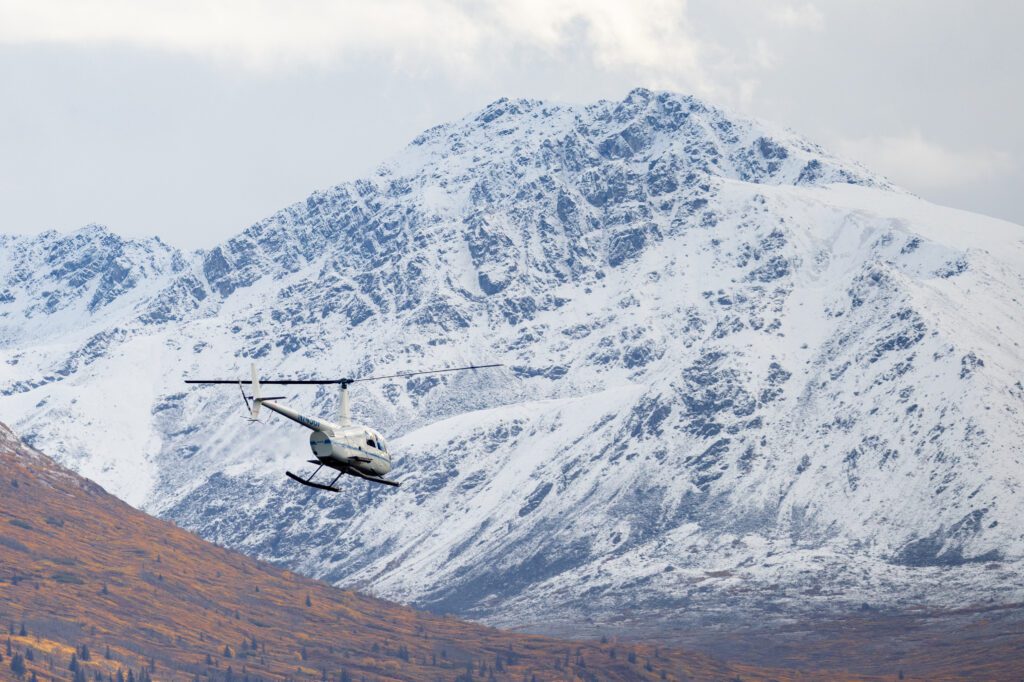
Experience the Beauty of Alaska Year-Round on our Flightseeing Tours
Every region of Alaska offers something extraordinary, from glacier valleys and coastal fjords to tundra plains and mountain peaks. Heli Alaska’s flightseeing tours give you the freedom to experience them all, offering unmatched views of wildlife and landscapes across every season. Whether you’re exploring the Kenai coast, the Interior, or the Arctic, our pilots will take you above it all for an unforgettable perspective of Alaska’s wild beauty.
Photography of Alaska's Wildlife
Alaska is a dream destination for wildlife and landscape photography, offering dramatic light, vast wilderness, and encounters you can’t capture anywhere else. From golden summer sunsets over glacier valleys to the soft winter glow reflecting off frozen lakes, every season brings new opportunities behind the lens. Photographers can frame grizzlies fishing for salmon, whales breaking the ocean’s surface, or the Northern Lights painting the night sky. No matter your skill level, Alaska’s wild beauty turns every shot into something extraordinary.

The Essential Gear
Alaska’s wild terrain demands the right tools to capture every moment, no matter the weather. Reliable equipment makes all the difference when you’re photographing in freezing winds, shifting light, or from the side of a helicopter. A sturdy tripod, weatherproof gear, and quality lenses let you focus on the shot instead of the conditions. Keeping your setup simple and durable will help you adapt quickly to every environment, from coastal fjords to alpine ridges.
Use a telephoto lens (300mm or more) for safe, close wildlife shots.
Bring extra batteries and memory cards, cold drains power fast.
Pack a waterproof cover or dry bag to protect your camera gear.
Carry a lightweight tripod or monopod for stability on uneven terrain.
How to Capture Alaska's Wildlife Responsibly
Keep a Safe Distance
Always photograph wildlife from a safe distance using a zoom lens. Getting too close can cause stress or force animals to change their behavior, which disrupts natural patterns. By observing quietly, you’ll also capture more authentic and relaxed moments.
Let Nature Lead
The best wildlife photos come from patience, not interference. Allow scenes to unfold naturally instead of trying to direct them — it keeps you safe and protects the animals. Staying alert and ready helps you anticipate action without disturbing the environment.
Respect the Environment
Every location you visit is part of a fragile ecosystem. Stick to marked paths, carry out everything you bring in, and avoid damaging vegetation. Small choices like where you step or set your gear can make a big difference in preserving Alaska’s wilderness.
Light, Weather, and Timing in Alaska
Alaska’s light and weather shift constantly, shaping every shot in unique ways. Knowing when and how to capture these changes helps turn simple moments into unforgettable images. From golden summer sunsets to winter’s soft glow, understanding these patterns is key to capturing Alaska’s true beauty.
Alaska’s light is unlike anywhere else in the world. Long summer days mean endless golden hours and soft shadows, while in winter, low-angled sunlight paints everything with a cool, cinematic tone. Whether you’re photographing wildlife at sunrise or capturing glaciers under twilight skies, adjusting your settings for contrast and warmth can make all the difference.
Each season brings its own challenges, and rewards. Spring and fall bring moody skies and vibrant color shifts, while summer offers clear conditions and crisp air for shooting from above. Winter photography requires extra preparation but delivers dramatic snow and ice compositions. Check local forecasts and always pack weatherproof gear when photographing in remote regions.
Wildlife photography in Alaska often comes down to timing. Early mornings and late evenings provide the best light and the most active animals. Spend time studying movement patterns, bears fishing, moose grazing, or eagles diving, and stay ready for fleeting moments that define your gallery. Patience in the field always pays off.
Aerial shots reveal Alaska’s vast scale and texture like nothing else. From above, the interplay of light and shadow across glaciers, valleys, and coastlines creates images you simply can’t capture on the ground. For the best visibility, aim for morning or evening flights when the sun is low and the terrain glows. Heli Alaska offers dedicated aerial photography charters tailored to these prime hours.

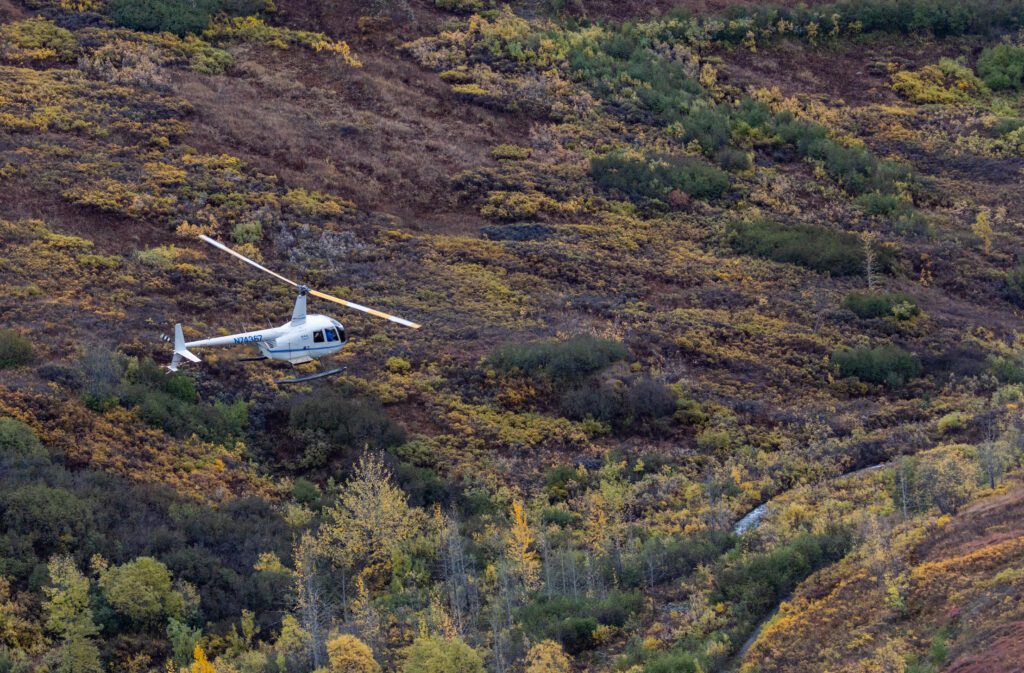
Book your Aerial Photography & Videography Charter
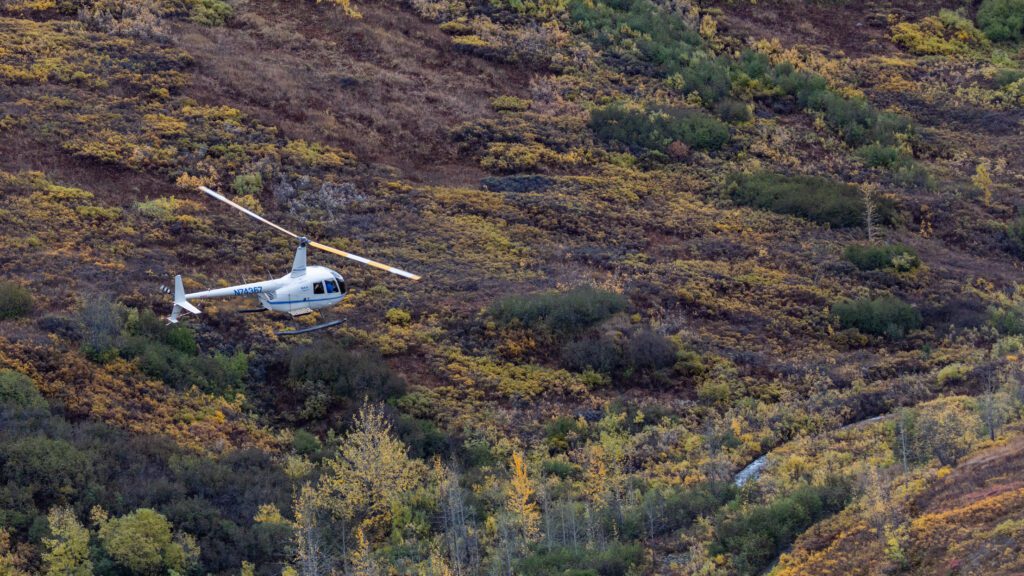
At Heli Alaska, we understand the importance of capturing the perfect shot. That’s why we offer high-quality aerial photography and videography services that cater to your specific needs. With our experienced pilots and customized services, you can trust us to get you the shots you need. Book your charter work today and experience Alaska’s beauty from a unique perspective with Heli Alaska.
Explore Our Flightseeing Tours
Explore our wide range of Alaska Flightseeing Tours
FAQ
What wildlife can you see in Alaska?
You can see brown bears, moose, caribou, Dall sheep, and gray wolves in Alaska, known collectively as the state’s “Big Five.” Alaska’s ecosystems also support hundreds of other species, including whales, eagles, and sea otters.
Common wildlife by category includes:
Land animals: Moose, black bears, brown bears, caribou, wolves, lynx
Marine animals: Humpback whales, orcas, sea lions, harbor seals, sea otters
Birds: Bald eagles, puffins, ravens, owls, migratory waterfowl
With more than 500 bird species and some of North America’s healthiest predator populations, Alaska offers one of the most complete wildlife experiences in the world.
Where are the best places to see wildlife in Alaska?
The best places to see wildlife in Alaska are Denali National Park, Kenai Fjords, Katmai National Park, and Southcentral Alaska near Anchorage. These regions include tundra, mountain, rainforest, and coastal habitats.
Top wildlife regions at a glance:
| Region | Common Sightings | Highlights |
|---|---|---|
| Denali National Park | Grizzly bears, moose, caribou, Dall sheep | Classic “Big Five” viewing |
| Kenai Peninsula | Whales, puffins, seals, bears | Coastal and marine life |
| Katmai National Park | Brown bears | Salmon fishing at Brooks Falls |
| Southeast Alaska | Humpback whales, eagles, black bears | Rainforest and fjord ecosystems |
| Arctic Alaska | Caribou, arctic foxes, migratory birds | Remote tundra wildlife |
To experience multiple regions in one trip, Heli Alaska’s flightseeing tours give travelers a rare opportunity to see diverse habitats and wildlife from above.
When is the best time of year to see wildlife in Alaska?
The best time to see wildlife in Alaska is from May to September, when animals are most active and daylight hours are longest.
Here’s a quick seasonal guide:
| Season | What to Expect |
|---|---|
| Spring (April–May) | Bears emerge from hibernation, migratory birds return |
| Summer (June–August) | Peak season for whales, moose, salmon runs, and bear viewing |
| Fall (September–October) | Caribou migrate, and forests turn gold and crimson |
| Winter (November–March) | Wolves, lynx, and eagles are active, and the Northern Lights appear |
Every season offers something unique, but summer provides the highest variety of wildlife sightings across land, sea, and sky.
What is the best month to see Bears in Alaska?
The best months to see bears in Alaska are July and August, during the salmon runs that attract them to rivers and streams. Brown and grizzly bears can often be seen feeding in places like Katmai National Park and the Kenai Peninsula. For a safe and spectacular view, mid-summer flightseeing tours with Heli Alaska allow travelers to watch bears in their natural environment while taking in glacier and mountain scenery.
Can you see wildlife near Anchorage or do you need to go further?
Yes, you can see wildlife near Anchorage without traveling far. Moose, bald eagles, and black bears are often spotted within minutes of the city.
Top nearby locations include:
Chugach State Park: Home to moose, black bears, and mountain goats.
Potter Marsh: A popular stop for migratory birds and waterfowl.
Knik River Valley: Excellent for spotting moose, eagles, and seasonal salmon runs.
For more remote or diverse sightings, flightseeing tours from Anchorage let you reach glacier valleys and alpine regions where larger wildlife like brown bears and caribou roam freely.
What are Alaska's 'big five' animals?
Alaska’s “Big Five” animals are the grizzly bear, moose, Dall sheep, caribou, and gray wolf. These species represent the state’s most iconic wildlife and are often the highlight of an Alaskan adventure.
Here’s what makes each special:
Grizzly Bear: Powerful predators often seen fishing for salmon.
Moose: The largest members of the deer family, common near wetlands and forests.
Dall Sheep: Found in high alpine cliffs and mountain slopes.
Caribou: Known for large herds that migrate across the tundra.
Gray Wolf: Elusive pack hunters that symbolize Alaska’s wild spirit.
Each animal plays a vital role in its ecosystem and can be viewed safely on guided or flightseeing tours.
How do the seasons affect wildlife viewing in Alaska?
The seasons have a major impact on wildlife viewing in Alaska. Spring and summer offer the most activity, while fall and winter highlight migration and predator behavior.
Seasonal effects at a glance:
| Season | Wildlife Highlights |
|---|---|
| Spring (April–May) | Bears emerge, birds return, caribou calve |
| Summer (June–August) | Peak viewing for whales, moose, and salmon runs |
| Fall (September–October) | Caribou migrate, bears prepare for hibernation |
| Winter (November–March) | Wolves, lynx, and eagles are active, with Northern Lights views |
Each season offers something unique, but summer provides the widest variety of sightings and the best weather for outdoor tours and photography.
Are helicopter tours or flightseeing tours good for wilidlife viewing in Alaska?
Yes, helicopter and flightseeing tours are among the best ways to view wildlife in Alaska. Flying gives you access to remote areas that are often unreachable by road, including glaciers, tundra, and mountain valleys where large animals roam freely.
From the air, you can safely spot bears fishing for salmon, whales breaching along the coast, and herds of caribou crossing open terrain. With experienced pilots and high visibility from every seat, Heli Alaska’s tours offer one of the most efficient and breathtaking ways to see Alaska’s wildlife in its natural habitat.
Is it safe to view wildlife without a guide?
It is not recommended to view wildlife in Alaska without a guide. Many animals, including bears and moose, can be unpredictable and dangerous if approached too closely. Guided tours are designed to keep both visitors and wildlife safe while providing the best chance of sightings.
Professional guides understand animal behavior, local regulations, and safe distances. For the safest and most rewarding experience, choose a guided ground tour or an aerial wildlife flightseeing tour with experienced pilots who know the terrain.
Can you see whales or marine life in Alaska?
Yes, Alaska is one of the best places in the world to see whales and marine life. Humpback whales, orcas, sea otters, and sea lions are common along the coast from May through September.
Top marine viewing locations:
Kenai Fjords National Park: Excellent for humpback whales, puffins, and sea lions.
Prince William Sound: Known for orcas and sea otters.
Southeast Alaska (Juneau, Sitka): Great for breaching whales and glacier backdrops.
Flightseeing tours and coastal charters often combine whale watching with glacier viewing, creating a one-of-a-kind Alaskan experience.
What are the best regions to see wildlife in Alaska?
The best regions to see wildlife in Alaska are Denali National Park, the Kenai Peninsula, Southeast Alaska, and the Arctic tundra. Each area offers different species and scenery.
| Region | Wildlife Highlights | Best For |
|---|---|---|
| Denali National Park | Moose, bears, wolves, caribou | Classic “Big Five” sightings |
| Kenai Peninsula | Whales, puffins, sea otters | Coastal and marine wildlife |
| Southeast Alaska | Black bears, bald eagles, humpback whales | Rainforest ecosystems |
| Arctic & Western Alaska | Caribou, arctic foxes, migratory birds | Remote tundra landscapes |
Heli Alaska’s flightseeing tours give travelers the chance to see several of these regions in one trip, offering wide-ranging views of Alaska’s wildlife and natural beauty.
Are there year-round tours for Wildlife viewing?
Yes, there are wildlife tours available year-round in Alaska. While summer offers the most activity, winter tours provide incredible opportunities to see animals adapted to the cold.
Seasonal examples:
Summer: Bears, whales, eagles, and salmon runs.
Fall: Migrating caribou and colorful landscapes.
Winter: Wolves, lynx, and Northern Lights viewing.
Spring: Returning birds and emerging bears.
Heli Alaska operates flightseeing tours throughout the year, allowing travelers to experience different wildlife behaviors and landscapes in every season.
How To Find Us
Heli Alaska, Inc. – Hanger #4, 4130 West Aviation Ave. 99629
Resources for More Information
Learning about Alaska’s wildlife before your trip can help you appreciate the state’s ecosystems and understand how to view animals safely and responsibly. The Alaska Department of Fish and Game provides detailed guides on species found across different regions, along with maps of viewing areas and seasonal activity updates. It’s an excellent resource for anyone planning a wildlife-focused itinerary.
For travelers interested in conservation and sustainability, the National Park Service – Alaska Region offers insights into protected habitats like Denali, Glacier Bay, and Kenai Fjords. Their pages include current park alerts, wildlife management information, and best practices for responsible viewing in sensitive areas.
If you want to explore scientific and educational perspectives, the U.S. Fish and Wildlife Service – Alaska features research programs and wildlife observation reports from across the state. Their resources highlight ongoing efforts to protect native species and preserve Alaska’s natural heritage, giving visitors a deeper understanding of the ecosystems they’ll experience from the air or on the ground.