

Alaska is huge, and seeing it all can be a real challenge. For a long time, helicopters were the only way to get a good look at the remote parts. But now, drones are changing the game, giving people new ways to see the wilderness. It’s not just about cool photos, either. Both drones and helicopters are doing some pretty important work out there, from helping industries to keeping an eye on wildlife. It’s interesting to see how these two types of aircraft, one big and one small, are both finding their place in the Last Frontier.
Key Takeaways
- Drones offer new, up-close views of Alaska, but helicopters are still needed for bigger jobs and longer distances.
- From surveying land to watching wildlife, drones have found many uses, while helicopters support major industries like oil and gas.
- A big new thing in farming is the use of aerial spraying drones, which help manage crops and pests more precisely.
- Experienced pilots are a huge part of helicopter operations, especially when flying in Alaska’s tough conditions.
- The future isn’t about one or the other; it’s about using both drones and helicopters together safely to get things done.
The Drone Revolution In The Last Frontier
Unlocking New Perspectives With Unmanned Aircraft
Drones have really changed the game in Alaska. It used to be that getting a good look at something meant expensive flights or long treks. Now, you can launch a drone and see things from a totally different angle. This is especially useful in a place as vast and rugged as Alaska. Think about it: surveying land, checking out wildlife, or even just getting a feel for the landscape is way easier with a drone. It’s not just about convenience, though. It’s about getting information that was previously out of reach. It’s like having a new set of eyes in the sky, and it’s making a big difference in how people work and explore here. You can now get helicopter tours in Alaska to see the state’s vast landscapes.
Navigating The Unique Challenges Of Alaskan Airspace
Flying drones in Alaska isn’t exactly a walk in the park. The weather can be pretty unpredictable, and you’ve got to deal with everything from strong winds to sudden snowstorms. Plus, there’s a lot of remote areas where you might not have a reliable signal. And let’s not forget the wildlife – you don’t want to accidentally buzz a moose or scare a bear. So, if you’re planning to fly a drone here, you need to be prepared. That means checking the weather forecast, knowing the local regulations, and being extra careful about where you’re flying. It’s all about being smart and responsible so you can enjoy the experience without causing any problems. The U.S. military has faced significant flaws in American drone technology during exercises in Alaska.
From Hobbyists To Commercial Operations
What’s interesting is how many different people are using drones in Alaska now. You’ve got hobbyists who are just having fun taking cool videos, but you also have businesses that are using drones for all sorts of things. Farmers are using them to check their crops, construction companies are using them to inspect bridges, and scientists are using them to study glaciers. It’s really opened up a lot of possibilities for surveying remote and inaccessible terrain. And as the technology gets better and more affordable, I think we’re going to see even more people finding new and creative ways to use drones here. It’s a pretty exciting time to be involved in aerial technology, especially in a place as unique as Alaska.
Drones are becoming more common in Alaska, but it’s important to remember that safety and respect for the environment are key. Always follow the rules, be mindful of wildlife, and make sure you’re not disturbing anyone. That way, everyone can enjoy the benefits of this technology without causing harm.
Specialized Drone Applications Across Alaska
Unlocking New Perspectives With Unmanned Aircraft
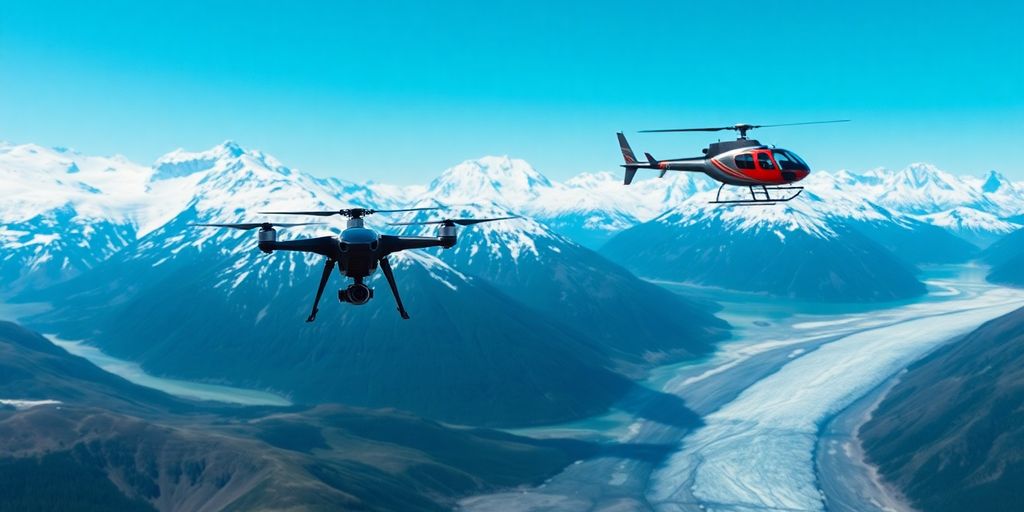
Drones are changing how things get done in Alaska. It’s not just about cool aerial shots anymore. They’re becoming essential tools for all sorts of jobs. Think of it as getting a bird’s-eye view without needing a plane or helicopter. This is especially useful in a state as big and wild as Alaska.
- Inspections of infrastructure like pipelines and bridges.
- Real estate photography showcasing properties and land.
- Search and rescue operations, covering large areas quickly.
Drones are making it easier and cheaper to see what’s happening in places that are hard to reach. This means better data, faster responses, and safer operations across the board.
Navigating The Unique Challenges Of Alaskan Airspace
Flying drones in Alaska isn’t like flying them in the lower 48. The weather can change in a heartbeat, and there are vast stretches of wilderness with limited or no cell service. Plus, you’ve got to watch out for wildlife and other aircraft. It’s a whole different ballgame. You need to know what you’re doing and follow the rules. The FAA has specific regulations, and it’s important to stay updated. Also, respecting local communities and their needs is key. It’s all about being responsible and safe. Neros Technologies, a drone manufacturer, is based in Fairbanks, Alaska, and they understand the challenges of operating in this environment.
From Hobbyists To Commercial Operations
What started as a fun hobby has turned into a serious business for many Alaskans. People are using drones for everything from taking amazing photos to surveying land. The commercial drone industry is growing fast, creating new jobs and opportunities. But it’s not just about making money. It’s also about using this technology to help communities, protect the environment, and make life better for everyone. It’s exciting to see how drones are changing Alaska, one flight at a time.
The Power And Precision Of Aerial Spraying Drones
Enhancing Agricultural Efficiency In The North
Let’s be real, farming in Alaska isn’t exactly a walk in the park. The growing season is short, and the conditions can be tough. That’s where aerial spraying drones come in. These little guys are changing the game by making it easier to treat crops quickly and efficiently. They can cover a lot of ground in a short amount of time, which is a huge deal when you’re racing against the clock to get everything done before winter hits. Plus, they can get into areas that are hard to reach with traditional equipment. It’s all about maximizing what you can grow in a limited time frame. Drones are transforming crop management in farming.
Environmentally Conscious Pest And Weed Management
Nobody wants to blanket their fields with chemicals if they don’t have to. Aerial spraying drones are pretty cool because they can target specific areas that need treatment. This means you’re using less pesticide and herbicide overall, which is better for the environment and your wallet. It’s a win-win. Precision is key here. Instead of just spraying everything, you can focus on the spots where pests and weeds are actually a problem. This targeted approach reduces the impact on beneficial insects and other wildlife, making your farm more sustainable.
The Technology Behind Targeted Spraying Systems
So, how do these drones know where to spray? It’s all about the tech. They’re equipped with GPS, sensors, and cameras that allow them to create detailed maps of your fields. This data is then used to plan the spraying route and adjust the amount of product being applied. It’s like having a super-smart assistant that knows exactly what your crops need. The drones use sophisticated software to analyze the data and make real-time adjustments, ensuring that the right amount of product is applied in the right place. This level of precision not only saves you money but also minimizes the risk of over-spraying and environmental damage. Unmanned Aircraft Systems serve as promising platforms.
When The Mission Demands More: The Role Of Helicopters
While drones have opened up many possibilities in Alaska, there are still situations where helicopters are the only viable option. Sometimes, the job simply requires the power and range that only a helicopter can provide. Let’s explore some of those scenarios.
Heavy Lifting And External Load Operations
Drones can lift a decent amount, but when you need to move serious weight, helicopters are the go-to. Think construction materials to remote sites, heavy equipment for mining, or even entire cabins. Helicopters with FAA Part 133 External Load certification transport a wide range of materials for customers. They’re equipped to handle external load operations safely and efficiently, making them indispensable for projects in areas with limited access.
Covering Vast Distances Beyond Drone Capabilities
Alaska is huge. Drones have limited range, but helicopters can cover hundreds of miles in a single flight. This makes them perfect for:
- Long-range surveys
- Rapid response in emergencies
- Transporting personnel and equipment to distant locations
Helicopters equipped with internal and external auxiliary fuel tanks conduct medical evacuation missions over long distances. This capability is crucial in a state where many communities are isolated and rely on air transport for essential services.
The Human Element In Complex Aerial Tasks
While drones are becoming increasingly autonomous, some tasks still require a skilled pilot and crew. This is especially true in challenging environments like Alaska. Consider:
- Search and rescue operations in bad weather
- Precision placement of equipment in tight spaces
- Responding to unexpected situations that require quick thinking and experience
In these cases, the human element is irreplaceable. Veteran pilots with thousands of hours navigating Alaskan skies bring a level of skill and judgment that drones simply can’t match. They can handle high-stakes aerial photography and cinematography assisting in wildlife capture and research.
Exploring Alaska From Above: Unforgettable Helicopter Tours
Alaska is huge. Like, really huge. And while driving around is cool and all, you only see a tiny fraction of it. That’s where helicopter tours come in. They let you see the Last Frontier in a way you just can’t from the ground. It’s like unlocking a whole new level of awesome. I mean, who wouldn’t want to soar over glaciers and spot wildlife from the sky?
Glacier Landings And Alpine Adventures
Okay, so glacier landings are seriously something else. Imagine touching down on a massive river of ice, surrounded by towering peaks. It’s like stepping onto another planet. You can actually get out and walk around on the glacier, which is a total bucket-list experience. Some tours even include guided hikes or dog sledding on the ice. It’s a bit pricey, but honestly, worth every penny for the sheer wow factor. Plus, you get some killer photos. If you are looking for a premier helicopter tour company specializing in sightseeing and glacier landing tours, check out Alaska Helicopter Tours.
Coastal Sightseeing And Marine Wildlife Spotting
If glaciers aren’t your thing, how about cruising along the coast? Alaska’s coastline is rugged and beautiful, with tons of hidden coves and bays. From a helicopter, you can spot whales, seals, sea otters, and all kinds of seabirds. It’s like a real-life nature documentary, but you’re actually in it! The pilots usually know the best spots for wildlife viewing, so you’re almost guaranteed to see something amazing. Consider a 30-minute helicopter flight over Resurrection Bay and Kenai Fjords National Park.
Custom Flightseeing For The Ultimate Alaskan Experience
Want something a little more personalized? Custom flightseeing tours are where it’s at. You can work with the tour company to create your own itinerary, hitting all the spots that are most interesting to you. Want to spend extra time photographing a particular mountain range? No problem. Interested in seeing a remote village? They can make it happen. It’s the ultimate way to experience Alaska on your own terms. Heli Alaska, Inc. offers unforgettable helicopter rides in Anchorage, Alaska.
I took a custom tour a few years back, and it was the best thing I’ve ever done. I got to see parts of the state that most people only dream about, and the pilot was super knowledgeable and friendly. It was a bit of a splurge, but I wouldn’t trade that experience for anything.
Here are some things to consider when booking a helicopter tour:
- Price: Helicopter tours can be expensive, so shop around and compare prices.
- Duration: Decide how long you want to be in the air. Shorter tours are cheaper, but longer tours let you see more.
- What’s Included: Find out what’s included in the price. Some tours include glacier landings, while others don’t.
- Company Reputation: Read reviews and check the company’s safety record. Heli Alaska, Inc. offers unforgettable helicopter tours for exploring the skies of Juneau, Alaska.
- Weather: Be prepared for potential weather delays. Alaska’s weather can be unpredictable, so tours sometimes get canceled or rescheduled.
| Tour Type | Average Cost | Duration | Highlights |
|---|---|---|---|
| Glacier Landing | $500+ | 2-3 hours | Walking on a glacier, alpine views |
| Coastal Sightseeing | $300+ | 1-2 hours | Whale watching, coastal scenery |
| Custom Flightseeing | $700+ | Varies | Personalized itinerary, remote locations |
So, if you’re planning a trip to Alaska, definitely consider a helicopter tour. It’s an experience you won’t soon forget. You can experience a scenic aerial adventure over Alaska’s Resurrection Bay and Kenai Fjords National Park.
Powering Alaskan Industries With Helicopter Charters
Alaska’s vastness and challenging terrain often demand more than traditional transportation can provide. That’s where helicopter charters step in, offering a lifeline to various industries operating in the state. From supporting the oil and gas sector to providing essential services for mining and exploration, helicopters are indispensable for accessing remote locations and tackling complex logistical challenges. It’s not just about getting there; it’s about getting the job done efficiently and safely.
Supporting The Oil And Gas Sector
The oil and gas industry in Alaska relies heavily on helicopter charters. These aerial workhorses transport personnel and equipment to remote drilling sites, pipeline facilities, and support stations. Quick response times are critical in this sector, and helicopters provide the speed and flexibility needed for maintenance, repairs, and emergency situations. Helicopter charter services are essential for keeping operations running smoothly in the challenging Alaskan environment.
Essential Services For Mining And Exploration
Alaska’s rich mineral resources are often located in areas inaccessible by road or conventional aircraft. Helicopter charters provide the means to transport geologists, engineers, and equipment to these remote sites. They also play a crucial role in aerial surveys, geological mapping, and the transport of core samples. Mining operations depend on helicopters for logistical support, ensuring that exploration and extraction activities can proceed efficiently.
Logistics And Crew Transport To Remote Sites
Getting people and supplies to remote work sites is a constant challenge in Alaska. Helicopter charters offer a practical solution, providing rapid and reliable transport for work crews, equipment, and essential supplies. Whether it’s a construction project, a research expedition, or a remote community needing assistance, helicopters can bridge the gap, connecting isolated locations to the rest of the state. Alaskan tour companies often use helicopters to access remote areas for sightseeing and adventure, showcasing the versatility of these aircraft.
Helicopters are more than just a mode of transport in Alaska; they are a vital component of the state’s economy. They enable industries to operate in remote and challenging environments, supporting economic growth and providing essential services to communities across the state. The ability to quickly and safely access these areas is what makes helicopter charters so important.
The Expertise Behind The Rotors: Meet The Pilots
Alaska’s aerial operations aren’t just about the machines; they’re about the people who fly and maintain them. These pilots bring a mix of skill, experience, and a deep respect for the Alaskan wilderness. They’re the ones making sure every flight is safe and successful, whether it’s a sightseeing tour or a critical supply run.
Veteran Leadership And A Commitment To Excellence
It’s not unusual to find pilots in Alaska with years of experience under their belts. Many come from military backgrounds, bringing with them a level of discipline and training that’s hard to match. They’ve seen it all, from challenging weather conditions to tricky landing spots. This experience is invaluable, especially when things get unpredictable. Heli Alaska, Inc. is a veteran-owned business.
Thousands Of Hours Navigating Alaskan Skies
Hours matter in aviation, and Alaskan pilots rack them up quickly. Flying in Alaska isn’t like flying anywhere else. The terrain is rugged, the weather can change in an instant, and the distances are vast. Pilots need to be able to handle anything that comes their way, and that takes time in the air. Some pilots have spent nearly a decade flying the Robinson R44 in Alaska, accumulating over 6,000 hours in the air. You can learn more from Alaska Airlines Captain Mike Swanigan.
FAA Certification And Rigorous Safety Standards
FAA certification is the baseline, but many Alaskan operators go above and beyond to ensure safety. They invest in advanced training, maintain their aircraft meticulously, and have strict protocols in place for every flight. It’s all about minimizing risk and making sure everyone gets home safe. Heli Alaska is an FAA certified helicopter tour company.
Operating in Alaska demands a safety-first approach. The environment is unforgiving, and there’s little room for error. Pilots and operators understand this, and they work hard to maintain the highest safety standards. It’s a culture of responsibility that permeates the entire industry.
Advanced Helicopter Operations For Unique Challenges
High-Stakes Aerial Photography And Cinematography
Alaska’s stunning landscapes make it a prime location for aerial photography and cinematography. But capturing those perfect shots from a helicopter is no easy task. It requires specialized skills and equipment. Pilots need to be able to fly smoothly and predictably, often in challenging weather conditions. Precision is key, as even small movements can ruin a shot.
- Stabilized camera mounts are a must.
- Experienced aerial cinematographers are essential.
- Communication between the pilot and camera crew is critical.
The best aerial shots often come from meticulous planning and a deep understanding of the environment. It’s about anticipating the light, knowing the terrain, and having a pilot who can execute the vision flawlessly.
Assisting In Wildlife Capture And Research
Helicopters play a big role in wildlife research and conservation in Alaska. They’re used to support the oil and gas sector for capturing animals for relocation, tagging, or medical treatment. This work is often done in remote areas, requiring pilots with specialized training and experience. It’s not just about flying; it’s about understanding animal behavior and working closely with wildlife biologists.
- Net gunning from helicopters.
- Darting animals from the air.
- Transporting researchers to remote study sites.
Precision Sling Loading In Rugged Environments
Sling loading is a common operation in Alaska, where helicopters are used to transport equipment and supplies to remote locations. But doing it in rugged terrain adds another layer of complexity. Pilots need to be able to experience the excitement and precisely position loads in tight spaces, often with limited visibility. It requires a high level of skill and coordination.
- External load certification is essential.
- Experienced ground crews are needed.
- Careful planning and risk assessment are critical.
Drones And Helicopters: A Collaborative Future
Combining Technologies For Enhanced Efficiency
It’s not about drones versus helicopters; it’s about drones and helicopters. The future of aerial operations in Alaska lies in combining the strengths of both technologies. Drones excel at tasks requiring detailed visual data and access to tight spaces, while helicopters are unmatched for heavy lifting and long-distance travel. Think of it this way: drones can scout a remote area for potential hazards, and then a helicopter can safely transport a crew to address those hazards. This synergy is already playing out in several sectors.
Choosing The Right Aircraft For The Job
Selecting the right aircraft depends heavily on the specific requirements of the mission. Here’s a quick guide:
- Drones: Ideal for inspections, surveys, and situations where minimizing risk to human personnel is a priority.
- Helicopters: Best suited for transporting heavy loads, covering vast distances, and operating in challenging weather conditions.
- Hybrid Approach: Combining both for complex tasks, such as using drones for initial assessment and helicopters for subsequent intervention.
It’s all about matching the tool to the task. A small inspection job? Drone. Moving heavy equipment to a remote mine? Helicopter. A large-scale environmental survey? Maybe a combination of both.
The Future Of Aerial Services In Alaska
The future looks bright for aerial services in Alaska, with drones and helicopters working side-by-side. As career opportunities at Alaska Airlines expand, we’ll see more integration of these technologies. This collaboration will lead to increased efficiency, reduced costs, and improved safety across various industries. Imagine offshore helicopter operations seamlessly integrated with drone services for inspections, or flightseeing adventures enhanced with drone footage. The possibilities are endless, and Alaska is poised to be at the forefront of this aerial revolution. The global drone market is expected to nearly double by 2030, so it’s important to consider how these technologies can work together. This could even include crewed-uncrewed teaming to improve overall mission capabilities. The key is to embrace innovation and find new ways to optimize aerial operations for the unique challenges and opportunities presented by the Alaskan wilderness.
Safety And Responsibility In The Alaskan Wilderness
Alaska’s vast and untamed landscapes demand a high degree of respect and caution from anyone taking to the skies. Whether operating drones or helicopters, prioritizing safety and environmental responsibility is not just a best practice, it’s essential for preserving the beauty and integrity of this unique region. It’s about making sure that we can keep enjoying these aerial adventures for years to come.
Prioritizing Environmentally Sound Practices
Operating aircraft in Alaska requires a commitment to minimizing environmental impact. This means being mindful of noise pollution, avoiding disturbance to wildlife, and preventing any potential contamination of pristine ecosystems. We need to be extra careful about where we fly and how we fly, so we don’t mess things up for the animals or the land. Aerial adventures can be fun, but not at the expense of nature.
- Use flight paths that minimize disturbance to wildlife habitats.
- Adhere to strict waste disposal protocols, especially in remote areas.
- Regularly maintain aircraft to prevent leaks and emissions.
Adherence To Federal Aviation Administration Regulations
Strictly following FAA regulations is non-negotiable for all aerial operations in Alaska. These rules are in place to ensure the safety of pilots, passengers, and the public. It’s important to stay up-to-date with the latest guidelines and requirements. This includes proper aircraft maintenance, pilot certification, and adherence to airspace restrictions. You can’t just fly around however you want; there are rules for a reason. Make sure you’re following them.
Building Trust With Local Communities
Establishing and maintaining positive relationships with local communities is vital for the long-term sustainability of aerial operations in Alaska. This involves open communication, respecting local customs and traditions, and addressing any concerns or complaints promptly and effectively. It’s about being a good neighbor and showing that we care about the people who call Alaska home. Helicopter rides should not disrupt the peace of local communities.
Operating in Alaska is a privilege, not a right. By prioritizing safety, environmental responsibility, and community engagement, we can ensure that aerial adventures continue to be a source of wonder and inspiration for generations to come. It’s about respecting the land, the people, and the rules, so everyone can enjoy the beauty of Alaska without causing harm.
Exploring the vast Alaskan wilderness is an incredible experience, but it demands respect and careful planning. The wild beauty here is powerful. We take our role in your adventure seriously, making sure every trip is both thrilling and safe. To see how we combine breathtaking views with top-notch safety, take a look at our exciting flightseeing tours.
Wrapping It Up
So, whether you’re flying your own little drone around or taking a ride in a helicopter, seeing Alaska from the air is just a whole different thing. It really puts the size of the place into perspective. You see how the mountains and glaciers just keep going, something you don’t fully get from the ground. Honestly, it’s an incredible view. If you ever have the opportunity to see Alaska from above, you should totally do it. It’s an experience that will stick with you for a long time.
Frequently Asked Questions
What’s the difference between using a drone and a helicopter in Alaska?
Think of it like this: drones are perfect for getting a closer look at things without needing a big crew. They’re great for surveying land or watching wildlife from a distance. But when you need to cover long distances, carry heavy stuff, or take people on an unforgettable adventure like landing on a glacier, a helicopter is the way to go. Each one has its own special job.
What kind of sights can I expect on an Alaskan helicopter tour?
Prepare to be amazed! A helicopter tour in Alaska can offer views you’ll never forget. You can fly over massive, ancient glaciers and even land on one for a walk. Other tours follow the stunning coastline, where you might spot whales, sea lions, and other marine life. You can often create a custom trip to see the exact parts of Alaska’s wilderness that you’re most excited about.
Is it safe to fly in a helicopter with Alaska’s unpredictable weather?
Safety is always the number one concern. Alaskan helicopter pilots are incredibly skilled and have thousands of hours of experience navigating the state’s unique and challenging conditions. They are certified by the Federal Aviation Administration (FAA) and must follow strict safety regulations. Companies also have their own tough safety standards to make sure every flight is secure.
How do helicopters help Alaskan industries like oil and gas?
Helicopters are a lifeline for many of Alaska’s key industries. Since so much of the state is remote, helicopters are essential for transporting crews and supplies to oil, gas, and mining sites. They can carry heavy equipment to places that trucks can’t reach, helping with everything from exploration to daily operations.
What are some of the jobs that drones do in Alaska?
Drones are becoming super useful for all sorts of tasks. They can fly over rugged terrain to create detailed maps for construction or surveying projects. Scientists use them to monitor wildlife populations without disturbing the animals. Drones are also helping farmers by spraying crops very accurately, which is good for the environment and saves money.
How much experience do the pilots have?
The pilots flying in Alaska are true experts. Many are military veterans who have spent years, and thousands of flight hours, mastering the Alaskan skies. They have faced all kinds of weather and terrain, which makes them highly prepared for any situation. It’s common for lead pilots to have over 6,000 hours of flight time, so you know you’re in very safe hands.
Do flight companies do anything to protect the Alaskan environment?
Yes, absolutely. Being environmentally responsible is a huge priority. Helicopter and drone operators are passionate about preserving Alaska’s natural beauty. They work closely with government agencies to follow all regulations and ensure their flights have minimal impact on the wilderness and its animal inhabitants.
Can I book a helicopter for something other than a sightseeing tour?
Definitely. Besides tours, you can charter a helicopter for many different kinds of special projects. This includes professional aerial photography and filmmaking, assisting scientists with wildlife research, or lifting heavy materials to a remote job site. These ‘external load’ operations require special FAA certifications, and experienced companies are equipped to handle them safely.